
NDTScan scans and gauges those structures where they stand, from Oxford to anywhere in the UK, and reports to the engineer, the insurer or the regulator in the form each needs.
What NDTScan surveys
- Slurry stores, lagoons and containment. Concrete walls and floors assessed by GPR and ultrasonics for reinforcement, cover, cracking and voids; steel tanks gauged for remaining thickness; the record written for the regulator's containment requirements and the insurer.
- Silos, grain stores and tanks. Steel and concrete shells gauged and scanned; floors checked for voids and moisture before new storage or plant; interiors inspected drained or by ROV where the contents allow.
- Barns, sheds and farm buildings. Frames, floors and roofs assessed for condition and strength before conversion, new loads or solar installations; post-war buildings checked for RAAC.
- Drainage, culverts and flood defences. Culverts and outfalls inspected by ROV and sonar where a person cannot go; sheet-piled and concrete flood walls gauged and scanned; embankments and sluices recorded by drone and LiDAR for change between visits (see drone-based surveying and scanning).
- Land and development. Buried structures, tanks, drains and voids located by radar before development, remediation or new foundations.
Working in rural locations
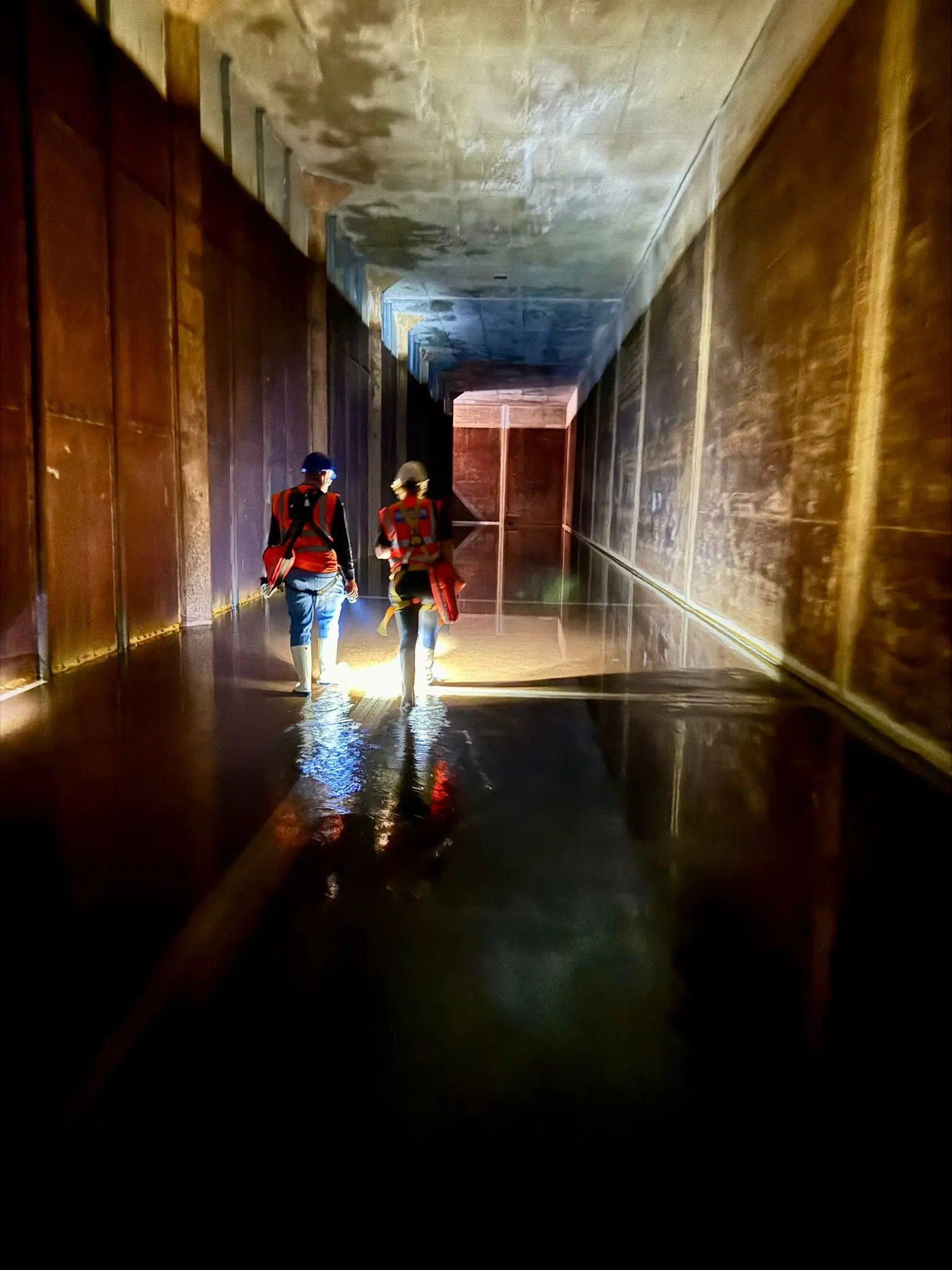
Everything NDTScan uses runs on batteries and fits in a van, so a site without power, hard standing or phone signal is a normal day. Surveys are planned around livestock, cropping and biosecurity rules, and the specialist arrives with the clean boots and the disinfectant the farm asks for. Confined-space entry into stores and tanks is arranged through partners holding the certifications, with NDTScan's specialist directing the readings, and drones and ROVs are used where they answer the question without an entry.
What you receive
Scaled plans of every scanned area with the indicated reinforcement, voids, drains and buried structures; thickness readings tabulated against nominal section with the loss and the minimum flagged; photographs and drone or ROV records referenced to the element; the equipment, calibration and standard applied; and the confidence attached to each finding with what it must not be relied on for, written for the engineer designing the repair, the insurer, or the regulator assessing containment. The interpreted report follows within an agreed number of working days.
Who instructs NDTScan
Farmers, estate managers and land agents, agricultural engineers and consultants, internal drainage boards and flood-risk authorities, environmental consultants and developers, and the contractors converting, building and repairing rural infrastructure. NDTScan attends from Oxford anywhere in the UK, usually within one to two working days and same day where the diary allows.
Do you offer surveys of farm infrastructure and drainage systems?
Yes. Culverts, outfalls and drains are inspected by ROV and sonar, flood walls scanned and gauged, and buried drains and structures located by radar.
Can you assess structural risks in old agricultural buildings?
Frames, floors and roofs are assessed for condition and strength before conversion or new loads, and post-war buildings are checked for RAAC plank by plank.
Do you support environmental remediation or land development surveys?
Yes. Radar locates buried tanks, structures, drains and voids where the signal reaches them, so remediation and foundations go in with the ground known.
Is NDT suitable for use in remote rural areas?
Yes. The equipment is battery powered and portable, and the survey is planned around access, livestock and biosecurity.
Questions we are asked
Can you scan slurry tanks, silos and containment structures for defects?
Yes. Concrete is assessed for reinforcement, cover, cracking and voids; steel is gauged for remaining thickness; and the record is written for the regulator's containment requirements and the insurer.