
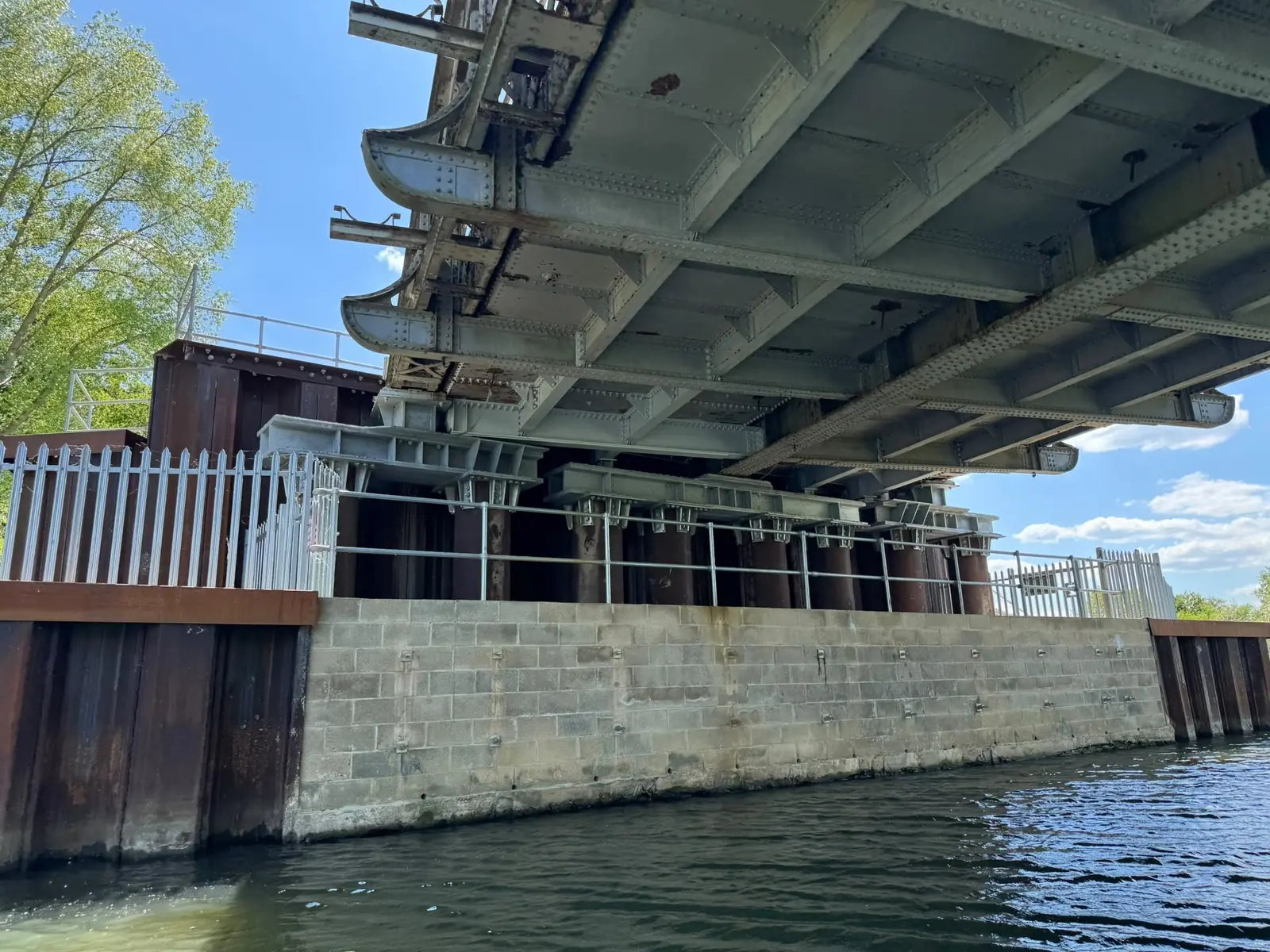
NDTScan inspects piles, quay walls, jetties, culverts, intakes and reservoirs below the waterline with inspection-class ROVs, sonar and ultrasonic thickness testing, working from a survey boat, the deck or the bank, and reports what was found in a form the engineer can act on.
What is inspected
- Piles and jetty steelwork. Section loss, pitting, holing, coating breakdown, missing anodes and marine growth on tubular and sheet piles, dolphins and bracing, from the splash zone to the bed.
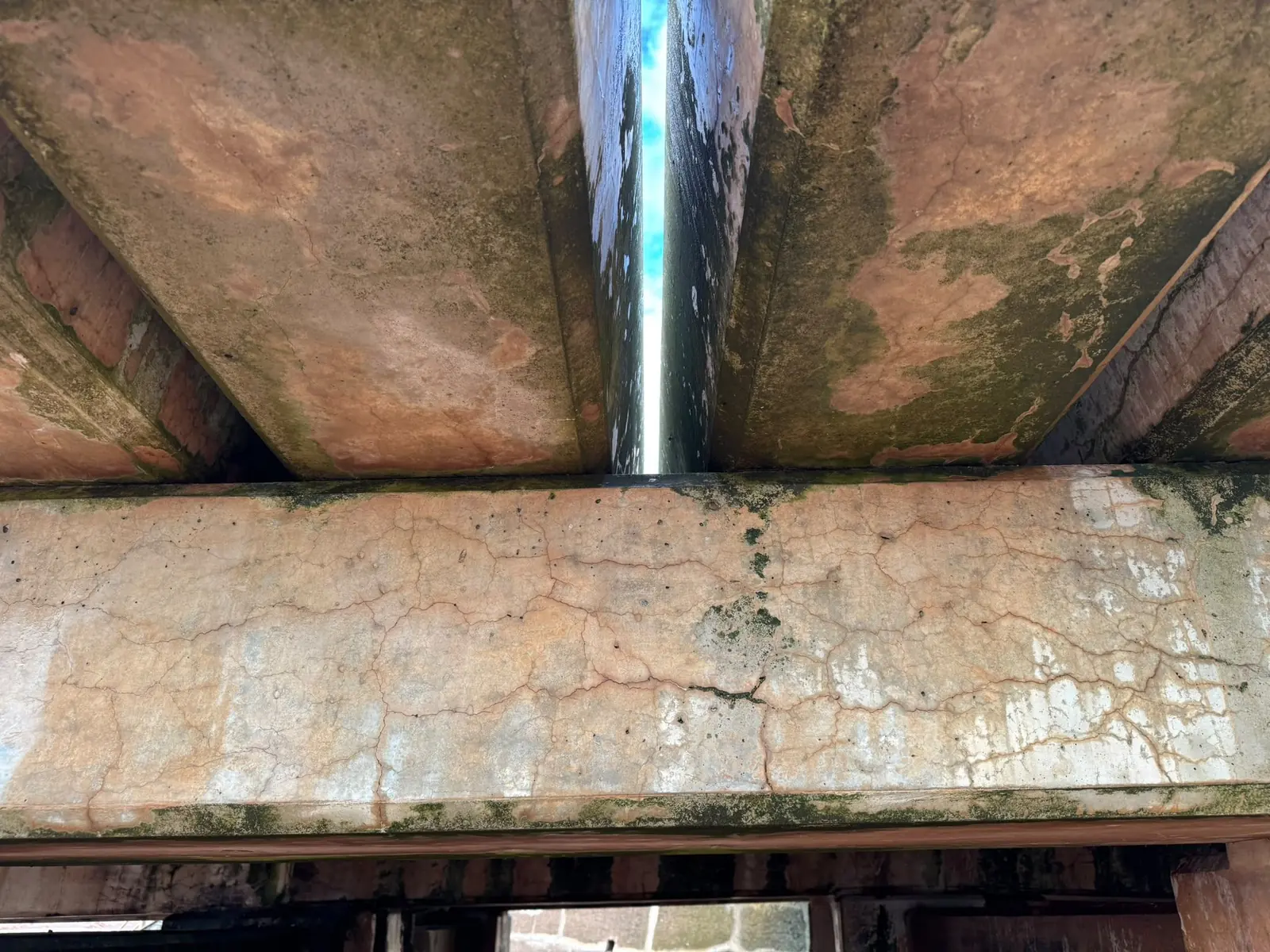
- Quay walls, sea walls and bridge piers. Cracking, spalling, voids behind the face, undermining and scour at the toe.
- Culverts, outfalls and intakes. Lining condition, blockage, joint displacement and scour, where a person cannot go.
- Reservoirs, tanks and lock structures. Walls, floors, gates and screens inspected in service, without draining.
- Hulls, pontoons and moorings. Condition at the waterline and below, with thickness readings on the steel.
How the survey is done
The method is chosen for the question, and two are usually used together.
- Inspection-class ROV. A tethered vehicle flown from the boat or the bank carries 4K video and lights for visual condition, and imaging sonar for the parts of the structure that turbid water hides. The ROVs NDTScan flies are built for ports, rivers, reservoirs and inland waters.
- Sonar. Imaging sonar records the shape of a wall, a pile group or a bed where visibility is nil, and shows scour holes, debris and undermining that video cannot.
- Ultrasonic thickness testing. Remaining wall thickness on steel piles, beams and gates is measured with calibrated gauges on a grid, at low water from the boat, deck or foreshore, and by probe below that where a project needs it. See thickness testing and corrosion mapping.
- Above the waterline. The same visit covers the soffit, deck and fenders by boat, and the concrete scanning and drone survey of the structure above, so the engineer gets one record of the whole asset. The full scope is described under marine surveys.
- Divers, where needed. Where a hand must touch the structure, for close-up measurement, cleaning or repair, NDTScan arranges commercial diving partners and coordinates the reporting, rather than pretending an ROV can do everything.
What the engineer receives
- The structure on a plan, with every inspected element numbered and the findings against each one.
- Thickness readings tabulated per element and level, with the original section where it is known, so loss can be calculated.
- Stills and video clips of every defect, referenced to the plan, and sonar images where they were used.
- The method, equipment and state of tide for each reading, and what each method could not resolve.
- A repeatable grid, so the next survey measures change rather than starting again.
Findings are presented with the confidence of each reading and the limits of the method stated. Classification of defects and recommendations for repair sit with the asset's engineer; the report is written so that engineer can make those decisions on evidence. The interpreted report follows within an agreed number of working days.
What underwater inspection cannot do
Video cannot see through silt, and sonar cannot read a crack width. Neither can measure steel thickness through heavy marine growth, which is why a cleaned patch is specified for each reading. An ROV cannot take a sample or make a repair. A survey that promises otherwise is promising more than the methods can give, and the report will say where that line was.
Who instructs NDTScan
Harbour and port engineers, local authority bridge and coastal teams, water companies and reservoir panel engineers, marina and estate owners, insurers, and the contractors and consultants working for them. Surveys are planned around tides, navigation and operations so the asset keeps working while it is inspected.
Where
Anywhere in the UK from NDTScan's Oxford base, with its own survey boat, usually within one to two working days and same day where the diary allows, and the survey timed to the state of tide. Related work: corrosion mapping, ROV inspection of dams, tanks and marine structures and underwater NDT inspection.
How is steel thickness measured underwater?
With calibrated ultrasonic thickness gauges on the steel at low water from a survey boat, the deck or the foreshore, on a grid the engineer can repeat. Below the tidal zone, readings are taken by ROV-mounted or diver-held probes where a project needs them.
What do you need from us to quote?
What the structure is, where it is, what the engineer wants to know and why, any drawings or past reports, and the access and tide constraints. From that NDTScan proposes the methods, the state of tide to work at, and the report the engineer will receive.
How quickly can you attend?
NDTScan attends from its Oxford base anywhere in the UK, usually within one to two working days and same day where the diary allows, with the survey timed to the tide. The interpreted report follows within an agreed number of working days.
Questions we are asked
Do you need divers for an underwater inspection?
Usually not for finding out what is there. An inspection-class ROV with sonar and video covers piles, walls, culverts and tanks faster and at lower risk than a diver, and the record it produces can be repeated next year on the same grid. Where a hand needs to touch the structure, for close-up measurement, cleaning or a repair, NDTScan arranges that through commercial diving partners and coordinates the reporting.