
NDTScan flies them as one method within a structural survey, so what the aircraft records is interpreted alongside the radar, ultrasonic and thickness data taken on the ground, and reported together.
What the aircraft record
- Roofs, facades and parapets. High-resolution imagery of cracking, spalling, displaced cladding, failed sealants and ponding, referenced to a plan so each defect can be found again from the ground.
- Bridges, viaducts and gantries. Soffits, bearings, piers and parapets that no platform reaches, recorded for the examining engineer.
- Thermal. Moisture in flat roofs, missing insulation, leaking pipework and hot joints in plant, flown at the right time of day for the temperature contrast to show.
- LiDAR and photogrammetry. Measurable models of buildings, estates, stockpiles and earthworks for digital twin and 3D modelling.
- Inside tanks, culverts and voids. The caged Flyability Elios 3 flies where a person should not go, recording the walls, roof and floor of a confined space without an entry.
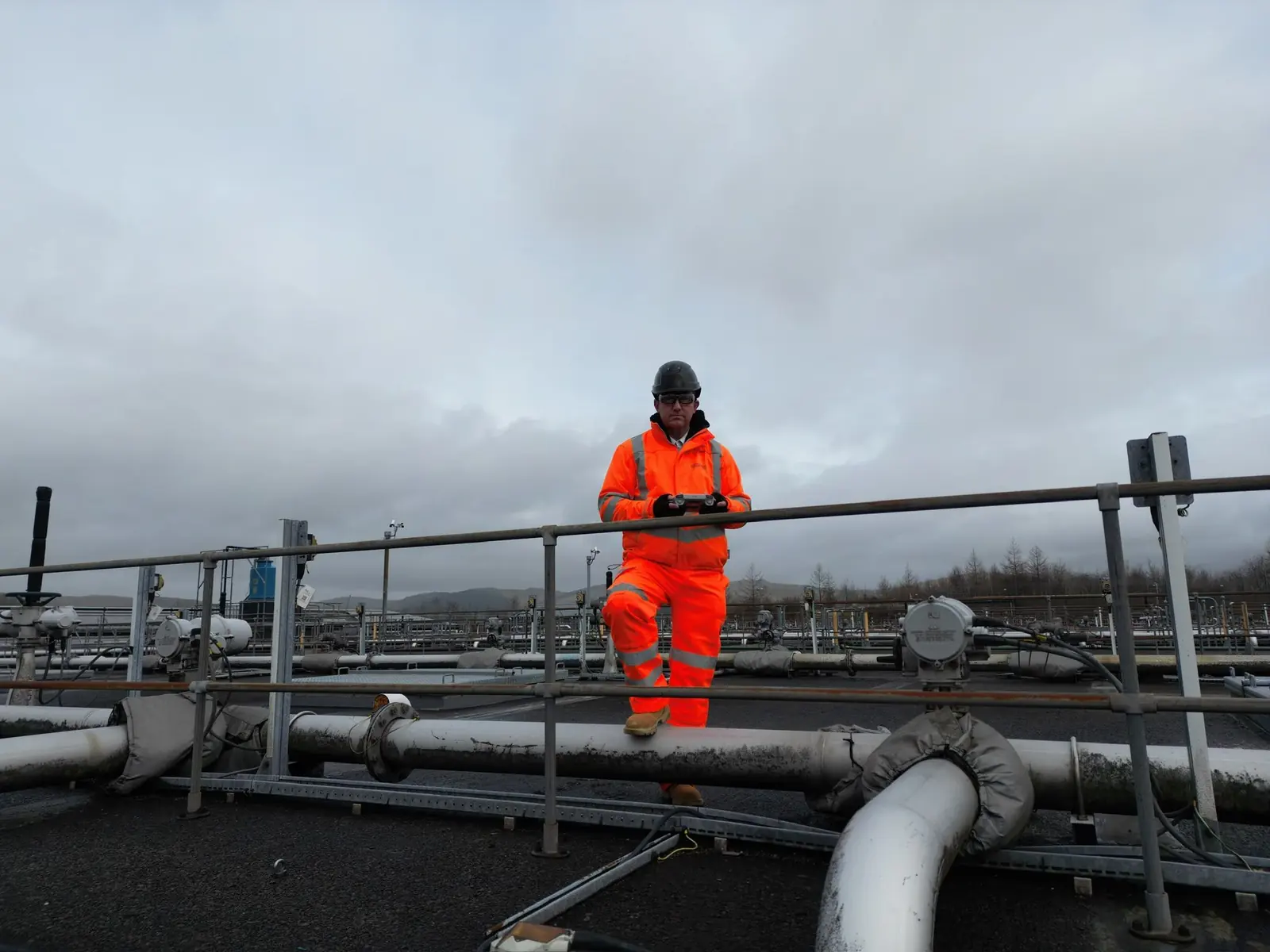
The aircraft
The DJI Matrice 400 with the Zenmuse P2 for imagery, T2 for thermal and a LiDAR payload for geometry, and the Flyability Elios 3 for confined spaces. Both are described on the equipment page and under drone-based surveying and scanning.
Flying legally and safely
Flights are made under NDTScan's CAA authorisations by qualified pilots, with the airspace checked and the site's permission in hand before the aircraft leaves the case. Airside, on the railway, over a port or near plant, the site's own rules decide whether and when a flight happens; where they say no, the structure is surveyed by other means rather than flown regardless. Insurance is in place for every flight.
What the engineer receives
- Imagery and thermal frames referenced to a plan or a model, with every defect numbered.
- Orthomosaics, elevations and point clouds where the survey was flown for geometry, with the tolerance that applied.
- The findings interpreted alongside the ground data from the same visit, in one report.
- The flight plan, airspace and weather record, and what could not be flown or seen and why.
The interpreted report follows within an agreed number of working days.
What a drone cannot do
It cannot see inside concrete or steel: a roof that looks sound from the air can be hollow underneath, which is why the aerial record is read with the radar and ultrasonic data rather than instead of it. Thermal shows a temperature difference, not its cause. Photogrammetry measures to a stated tolerance, not to a surveyor's total station. Each of those limits is recorded where it applied.
Who instructs NDTScan
Estate and facilities teams with roofs and facades to assess, bridge and highway engineers, industrial and utility operators with stacks, tanks and plant, and the contractors and consultants working for them. NDTScan attends from Oxford anywhere in the UK, usually within one to two working days and same day where the diary allows.
Can you fly near airports, railways and ports?
Only with the airspace cleared and the site's permission. Where a flight is not permitted, the structure is surveyed from access equipment or from the ground.
How reliable is a photogrammetry or LiDAR model?
reliable enough to measure areas, volumes and deformation to a stated tolerance, which is given in the report. It is not a substitute for a control survey where millimetres matter.
Questions we are asked
Can a drone replace a roof inspection?
It replaces the climb, not the judgement. The aircraft records the roof in detail; the specialist decides what the images and the thermal frames mean, and where a hand on the surface or a scan from below is still needed.