

It does not inspect aircraft; that is the work of approved maintenance organisations, and this page is clear about the difference.
What NDTScan surveys on an aviation estate
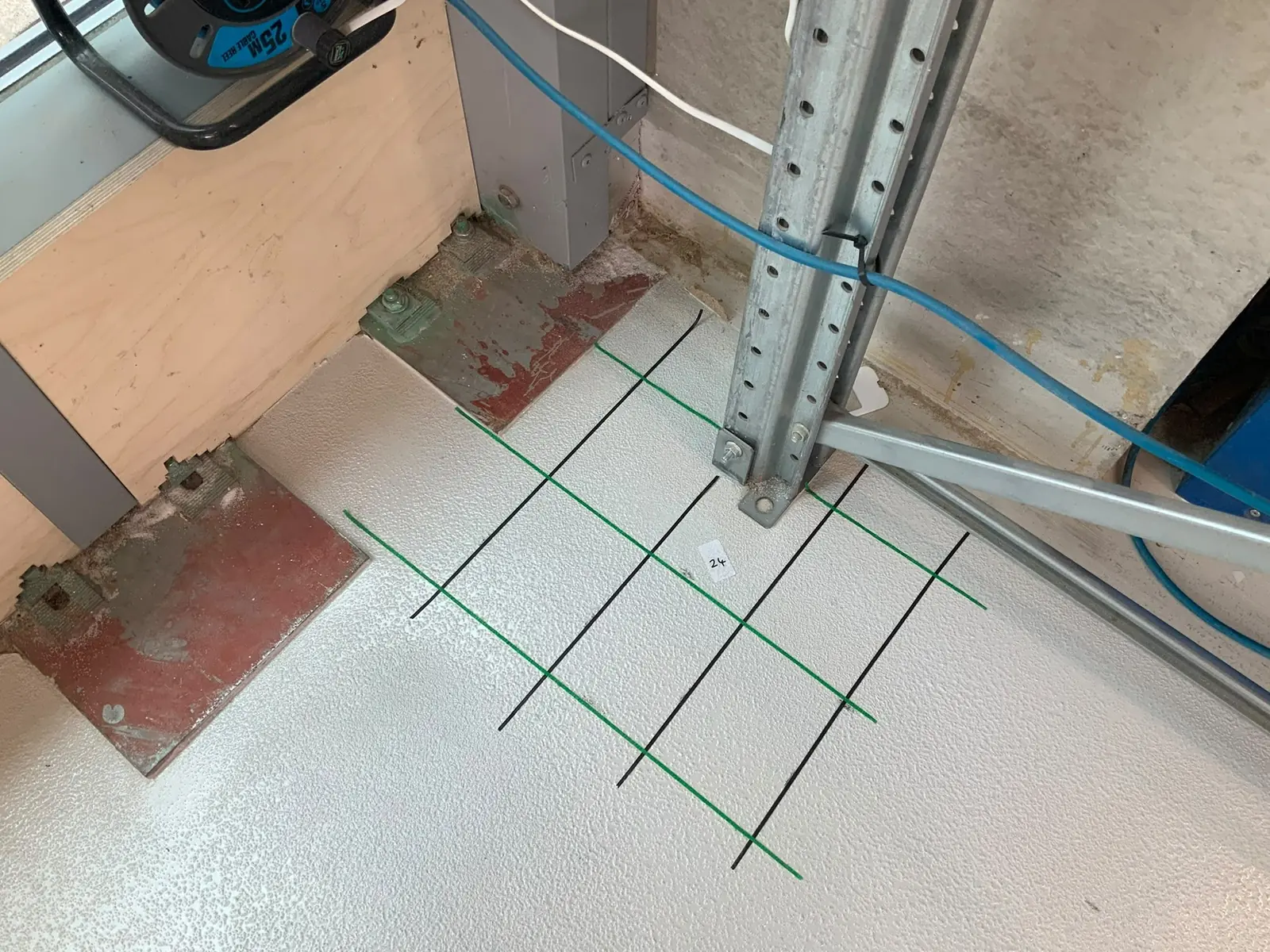
- Hangar floors. Reinforcement, post-tensioning, ducts and services indicated by GPR before docking systems, jacking points, anchors, pits and plant are fixed through the slab; slab thickness and voids beneath where the signal returns.
- Hangar frames and roofs. Steel thickness and section loss on trusses, columns and crane rails by ultrasonic gauging; roof condition by drone where the aerodrome permits it, or by access equipment where it does not.
- Aprons, stands and taxiway slabs. Thickness, reinforcement and voids beneath pavement quality concrete by radar, and strength by rebound hammer, pulse velocity and cores where an assessment needs a tested number.
- Fuel infrastructure. Steel tank shells, pipework and support structures gauged for remaining thickness, and the concrete bunds and slabs beneath them scanned for reinforcement and condition.
- Control towers, terminals, fire stations and offices. Condition surveys of the concrete frame, cover, carbonation and half-cell mapping, and RAAC identification in buildings of the late 1950s to mid 1990s.
- Bridges, culverts and drainage under the airfield. Scanned, gauged and, where flooded, inspected by ROV.
Working airside
Surveys are planned with the aerodrome: passes and escorts, vehicle rules on the apron, FOD control at the end of every shift, and timing around movements and night closures. Radar, ultrasonic and cover instruments are battery powered and emit nothing that concerns an aerodrome's radio environment. Drone surveys airside are flown only with the aerodrome's permission and NDTScan's own CAA authorisations; where that permission is not given, roofs and facades are surveyed from access equipment instead. Nothing is promised that the aerodrome's rules do not allow.
Methods
- Concrete scanning: GPR, Ferroscan, pulse velocity and pulse echo, cover, carbonation and half-cell.
- Ultrasonic thickness testing and corrosion mapping of structural and tank steel, through sound coatings.
- Drone survey with photogrammetry, thermal and LiDAR, where permitted.
- LiDAR and 3D capture of hangars and plant for a measurable model.
- Phased array, eddy current and radiographic testing of welds, where a project specifies them, arranged through specialist partners and coordinated by NDTScan.
What the engineer receives
Scaled plans of every scanned or gauged area with the findings against each element, depth and thickness tables with the tolerance that applied, photographs, the equipment and standard used, and the confidence attached to each finding with what it must not be relied on for. Anything that affects safety is raised on the day; the interpreted report follows within an agreed number of working days. Surveys follow the relevant ISO and BS EN standards, with instruments calibrated by UKAS-accredited laboratories where the work requires it.
Who instructs NDTScan
Airport and airfield estate teams and their consulting engineers, hangar operators and MRO facilities for their buildings and floors, fuel and ground-services operators for their infrastructure, and the contractors fitting out, re-slabbing or re-roofing on an aviation estate. NDTScan attends from Oxford anywhere in the UK, usually within one to two working days and same day where the diary allows.
Can you work airside?
Yes, under the aerodrome's escort, pass and vehicle rules, with the survey planned around operations and the equipment approved for the apron. Drone work airside is only flown with the aerodrome's permission and NDTScan's own CAA authorisations in place; where it is not permitted, the roof or facade is surveyed by other means.
Can a hangar floor be scanned before new fixings go in?
Yes. Ground penetrating radar indicates the reinforcement, any post-tensioning, ducts and services in the slab before docking, jacking points, anchors or new plant are fixed through it, and the slab thickness where the signal returns from the far face.
Could an airport building contain RAAC?
Terminals, control towers, fire stations and offices built between the late 1950s and the mid 1990s can. NDTScan identifies RAAC plank by plank with radar and reports condition in line with IStructE guidance.
Questions we are asked
Do you inspect aircraft?
No. NDTScan surveys the buildings, slabs and structures that aircraft operate from. Airframe and component NDT is a separate discipline carried out by approved maintenance organisations, and where a client needs both, NDTScan works alongside them rather than claiming their work.